

On this page
If your dryer used to finish a load in under an hour and now needs two cycles, the problem is often not the dryer itself. In most of the slow-drying dryers we see across Sacramento and the East Bay, the real culprit is hidden behind the machine: a dryer vent packed with lint.
A clogged vent does more than waste time and electricity. According to the U.S. Fire Administration, about 2,900 home clothes dryer fires are reported every year, and failure to clean is the leading cause. This guide shows you how to spot a clogged vent, how to test it in two minutes and what you can safely clean yourself.
How a Dryer Vent Works
A dryer works by moving air. It heats air, blows it through the tumbling clothes to pick up moisture, and pushes that hot, damp air out through a duct to a vent on the outside wall or roof. Every load also sheds lint, and while the lint screen catches most of it, some always gets past and settles inside the duct.
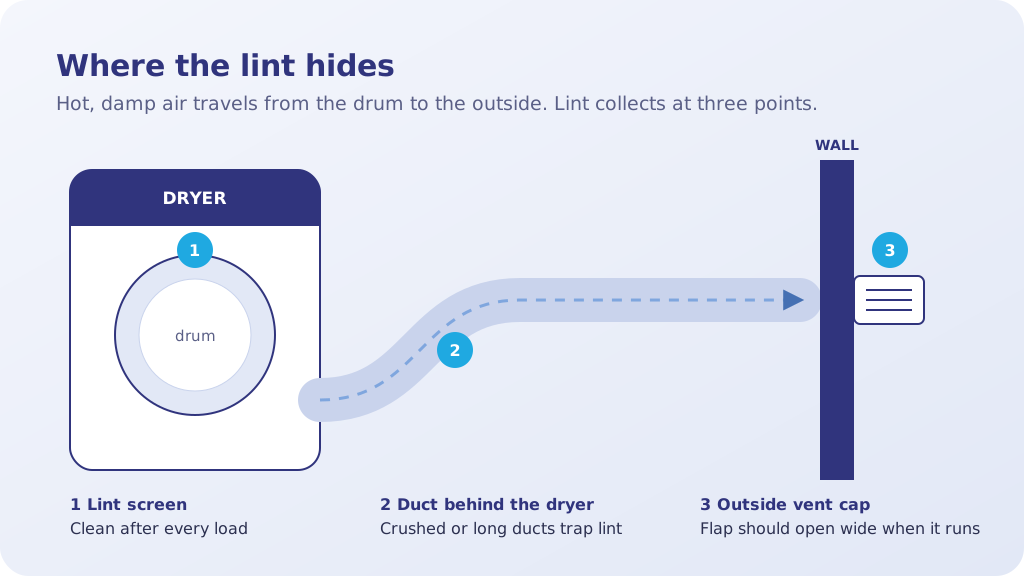
Over months, that lint narrows the duct like a clogged artery. Less air gets out, so the clothes stay damp longer, the dryer runs hotter and the lint inside the duct sits right next to a heat source.
Seven Signs Your Dryer Vent Is Clogged
- Clothes take longer than one cycle to dry, or come out hot but still damp.
- The dryer and the laundry room feel unusually hot while it runs.
- The top or sides of the dryer are hot to the touch.
- A burning or musty smell while the dryer is running.
- The outside vent flap barely opens or does not move at all.
- Lint collects around the door, the floor behind the dryer or the outside vent.
- The dryer shuts off mid-cycle or stops heating completely. On many models a safety fuse blows when the airflow is blocked.
If you notice a burning smell, stop the dryer right away and do not use it until the vent and the dryer have been checked.
The Two-Minute Vent Test
You can check your airflow without any tools:
- Clean the lint screen so it does not affect the result.
- Start the dryer on a timed or air-dry setting with no clothes inside.
- Go outside and find the vent cap. On most homes it is on an exterior wall near the laundry room; on some newer homes it is on the roof.
- Hold your hand in front of the vent. You should feel a strong, steady stream of warm air and see the flap open wide.
A weak puff of air, a flap that hardly moves or no air at all means the duct is restricted. A strong airflow with clothes still taking forever points to a problem inside the dryer instead, such as a failing heating element, gas igniter or thermostat.
What You Can Clean Yourself
The lint screen
Clean it after every single load. Once a month, wash it with warm soapy water and a soft brush: dryer sheets and fabric softener leave an invisible film that blocks air even when the screen looks clean. Let it dry completely before putting it back.
The short duct behind the dryer
Unplug the dryer (and turn off the gas valve on a gas dryer), slide it out carefully and disconnect the duct from the back. Clear the lint by hand and with a vacuum hose, and vacuum the opening on the back of the dryer. While you are there, check the duct itself: it should be rigid or semi-rigid metal, as short and straight as possible, with no kinks or crushed sections. White plastic or thin foil ducts are a fire risk and should be replaced.
The outside vent cap
Pull out any lint you can reach, make sure the flap swings freely, and remove anything blocking it, such as bird nests or plants growing over the cap.
Gas Dryers: One More Reason to Keep the Vent Clear
A gas dryer burns natural gas or propane to make heat, and the exhaust it sends out through the vent contains combustion gases, including carbon monoxide. When the vent is blocked, that exhaust has nowhere to go and can build up behind the dryer or leak back into the laundry room. If you have a gas dryer, a clear vent is a safety system, not just a convenience. Keep a working carbon monoxide alarm near the laundry area, and if you ever smell gas, leave the house and call your gas utility from outside.
Common Mistakes That Clog Vents Faster
- Skipping the lint screen "just this once." Every load without a clean screen sends extra lint into the duct.
- Pushing the dryer tight against the wall, which crushes the duct and cuts the airflow in half.
- Using a duct that is far too long or has extra bends. Every turn is a place for lint to settle.
- Overloading the drum. Clothes need room to tumble, and overloaded loads take longer and shed more lint.
- Drying items with foam, rubber or plastic, or anything stained with oil or gasoline, which can melt or catch fire.
When to Call a Professional
Long duct runs through walls, attics or up to the roof are hard to clean properly without professional rotary brushes, and pushing lint deeper can make the blockage worse. Call a pro if the duct is longer than a few feet, has several turns or exits through the roof, or if the airflow is still weak after you have cleaned what you can reach.
Call an appliance technician as well if the dryer has stopped heating, shuts off mid-cycle or smells like burning. A clogged vent often damages the dryer itself: the thermal fuse, the heating element, the high-limit thermostat or the blower wheel can fail from repeated overheating. Clearing the vent alone will not bring the heat back if one of those parts has already failed.
How Often Should You Clean the Dryer Vent?
Clean the lint screen after every load and the full vent duct at least once a year. Do it more often if you have a large family, pets, a long or roof-mounted duct, or if you dry a lot of towels and bedding. A clean vent saves energy, shortens drying time, helps the dryer last longer and greatly lowers the fire risk.
If your dryer takes forever, runs hot or has stopped heating, AceTech technicians check both the dryer and the airflow and fix the real cause, with service across Sacramento, Fair Oaks, Roseville, Folsom, Davis and the East Bay, usually the same day.