On this page
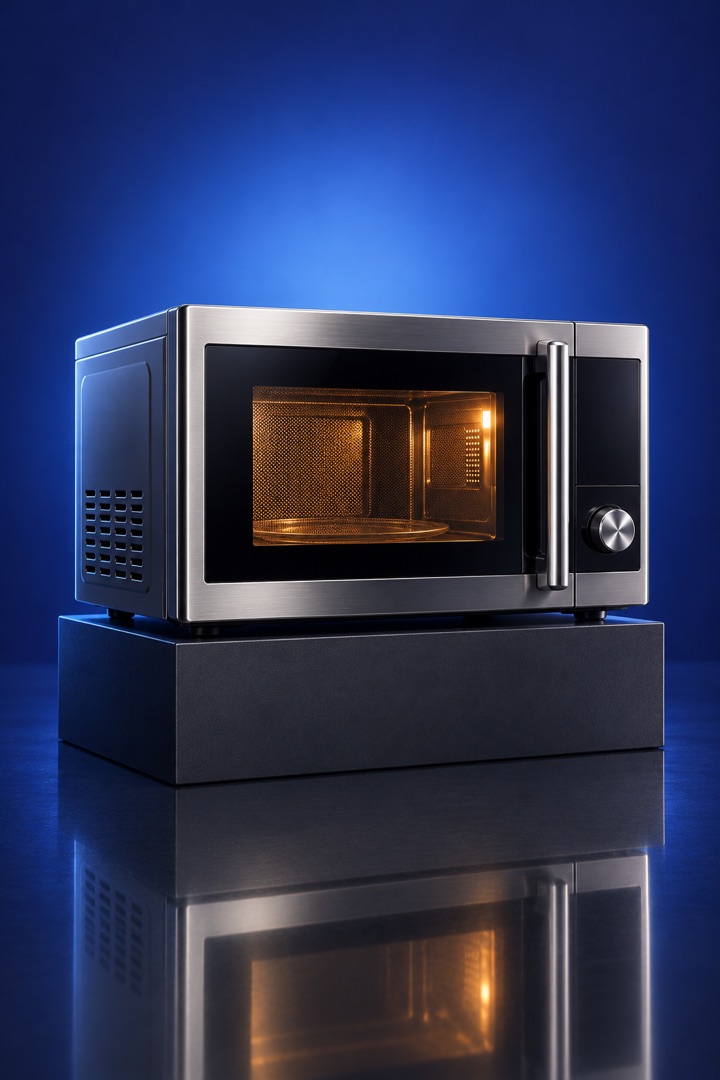
Your microwave hums, the turntable spins, the light is on, the timer counts down to zero... and the coffee comes out exactly as cold as it went in. It is one of the most common calls we get across Sacramento and the East Bay, and it almost always comes down to one broken link in a short chain of parts.
This guide walks through that chain, the few things you can safely check yourself, and how to decide whether the microwave is worth fixing.
Why a Microwave Can Run Without Heating
A microwave is really two machines in one box. The low-voltage side runs the display, the light, the fan and the turntable motor. The high-voltage side is what actually cooks: a transformer, a diode and a capacitor push about 2,000 volts into the magnetron, which turns that power into microwaves. A metal channel called the waveguide carries them into the cooking cavity, where they make the water in your food vibrate and heat up.
Because the two sides are separate, a microwave can look perfectly healthy while the high-voltage side is dead. Everything you can see and hear keeps working. Only the heat is missing.

Do the Cup-of-Water Test First
Before anything else, confirm the problem with a simple test. Put one cup of room-temperature water in a microwave-safe mug, run it on full power for one minute, and check it. A healthy microwave makes it clearly hot, close to steaming. Lukewarm water means the microwave is heating weakly; water that is unchanged means it is not heating at all.
The difference matters. Weak heating often points to an aging magnetron or a power-level setting, while no heating at all usually means a part in the high-voltage chain has failed completely.
Safe Checks You Can Do Yourself
These checks happen outside the cabinet and take a few minutes:
- Power level. A microwave left on power level 1 or 2 cycles on and off and barely warms food. Set it back to high (10) and repeat the water test.
- Demo or showroom mode. Many models have a demo mode that runs the display, light and turntable without heating. It is often switched on by accident during cleaning. Your manual lists the button combination to turn it off.
- The door. Open and close it firmly. If it needs to be slammed to start, or the latch looks worn or cracked, a door switch may only be closing part of the way.
- A power reset. Unplug the microwave (or switch off the breaker for a built-in unit) for two minutes, then try again. This clears a confused control board.
If none of these bring the heat back, the fault is inside the cabinet.
What a Technician Looks For
These are the parts behind a microwave that runs but will not heat, and the clues that usually point to each one.
| What you notice | Likely cause |
|---|---|
| Runs normally but heats nothing, no unusual sounds | Failed magnetron or a blown high-voltage fuse |
| Louder hum or buzz than usual, then no heat | Shorted high-voltage diode or capacitor |
| Heats weakly and takes much longer than it used to | Aging magnetron |
| Sparks or a burning smell inside the cavity | Burned waveguide cover, damaged paint or a failing magnetron |
| Stopped working right after the door was slammed | Door switch or the main fuse it protects |
| Heats on some days, not on others | Weak door switch or a failing relay on the control board |
A technician tests each part with the power off and the capacitor safely discharged, instead of replacing parts by guesswork. Replacing a magnetron when the real problem is an inexpensive door switch is a common and costly mistake.
Why You Should Not Open the Cabinet
We do not say this lightly: a microwave is the one household appliance you should never take apart yourself. The high-voltage capacitor can hold a dangerous charge for days after the microwave is unplugged, and touching the wrong terminal can be fatal. Removing the cover can also bend the door seal or the waveguide and let microwave energy leak out once the unit is back together.
If your microwave sparked, smelled of burning or tripped the breaker, unplug it and leave it unplugged until it has been checked.
Repair or Replace?
The answer depends mostly on what kind of microwave you have.
Countertop microwaves. If an inexpensive countertop model needs a new magnetron, replacing the whole unit often makes more sense. A failed door switch or fuse on a newer countertop model, on the other hand, is usually a quick and worthwhile repair.
Over-the-range, built-in and drawer microwaves. These cost far more, are sized to fit your cabinets and often match the rest of your kitchen. Swapping one out can mean new mounting, venting and trim work. Repairing them, even with a new magnetron, is usually the better choice, especially for brands like Wolf, Thermador, Sub-Zero, KitchenAid and Bosch.
Age matters too. Most microwaves last around nine to ten years. A built-in unit close to that age with several worn parts may be due for replacement; a five-year-old one almost always deserves a repair. Your technician gives you an upfront price so you can make that call before any work starts.
How to Make Your Next Microwave Last Longer
- Never run it empty. With nothing to absorb the energy, it reflects back into the magnetron and shortens its life.
- Keep the inside clean. Food splatter on the waveguide cover (the small panel on the side wall) can burn and start sparking.
- Close the door gently. Slamming it wears out the latch and the door switches faster than anything else.
- Keep metal out, including foil and dishes with metallic trim.
- On an over-the-range model, clean the grease filters every month or two so the vent fan does not overheat.
If your microwave runs but will not heat, our technicians repair countertop, over-the-range, built-in and drawer microwaves across Sacramento, Fair Oaks, Roseville, Folsom and the East Bay, usually the same day.