On this page
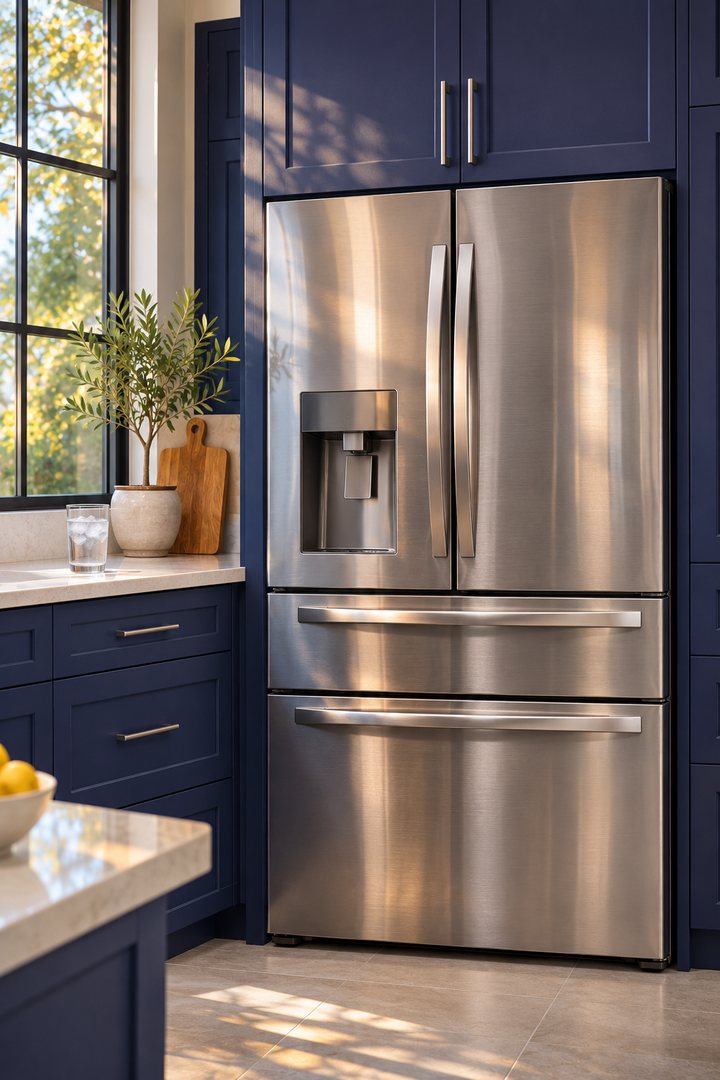
If you own a Samsung French-door or four-door refrigerator, there is a good chance you have met this problem already: the ice bucket turns into one solid block, the dispenser stops working, or water drips out of the ice chute onto the floor. The ice maker is the single most common reason Samsung owners in Sacramento and the East Bay call us about their fridge.
The good news is that the cause is usually predictable. This guide explains why Samsung ice makers act up, how to match your symptom to the likely cause, how to safely defrost a frozen ice maker yourself, and when it is time for a technician.
Why Samsung Ice Makers Have a Reputation
On most Samsung French-door models, the ice maker does not sit in the freezer. It lives in a small insulated compartment inside the left fresh-food door, cooled by a stream of freezer air and its own small fan. That design frees up freezer space, but it also means the ice maker sits in a box that has to stay below freezing while surrounded by a refrigerator section at around 37°F.
When that box loses its seal, or the parts that control its temperature start to fail, warm, moist air gets in. The moisture freezes on the ice maker, the fan and the bucket. Ice cubes melt slightly, refreeze into a block, and meltwater finds its way down the chute. Over a few weeks the whole compartment can fill with frost.
Match Your Symptom to the Likely Cause
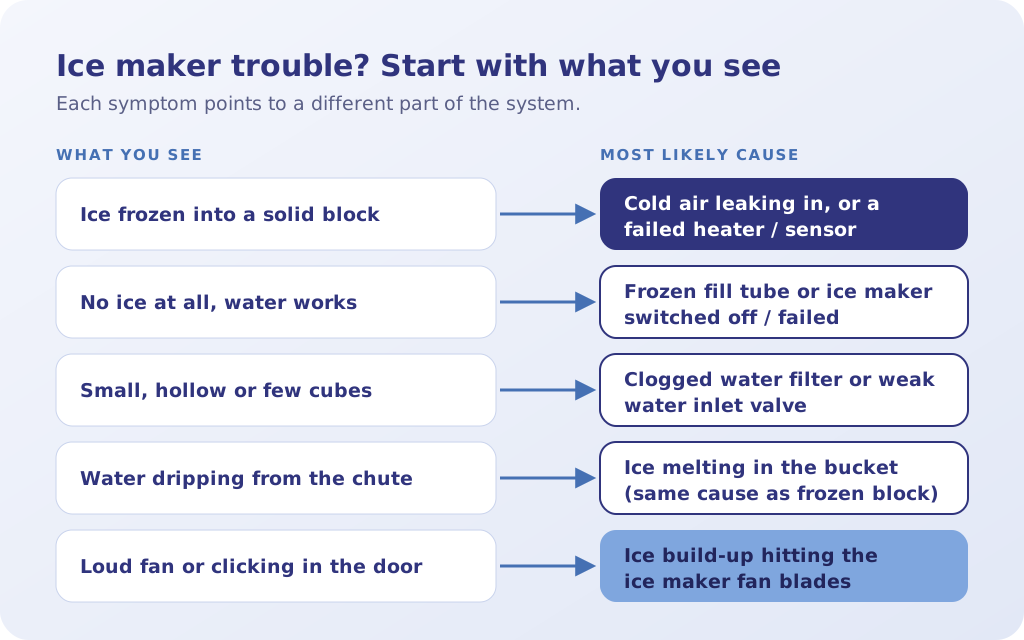
Different symptoms point to different parts of the system. Use this map to narrow it down before you start taking things apart.
Ice frozen into a solid block
This is the classic Samsung complaint. It almost always means warm air is getting into the ice compartment or the compartment is not being kept cold enough. The usual suspects are a worn or misaligned compartment gasket, a door that is not closing fully, or a failed ice maker heater, sensor or fan.
No ice at all, but the water dispenser works
If water comes out of the dispenser, the water supply is fine. Check that the ice maker is switched on (on many models the "Ice Off" light is on the control panel) and look for a frozen fill tube: a short tube at the back of the ice maker that can freeze solid and block the water. A failed ice maker module is the next step.
Small, hollow or very few cubes
This points to a water flow problem rather than a temperature problem. An old water filter is the most common reason, followed by low water pressure to the house or a weak water inlet valve on the back of the refrigerator.
Water dripping from the ice chute
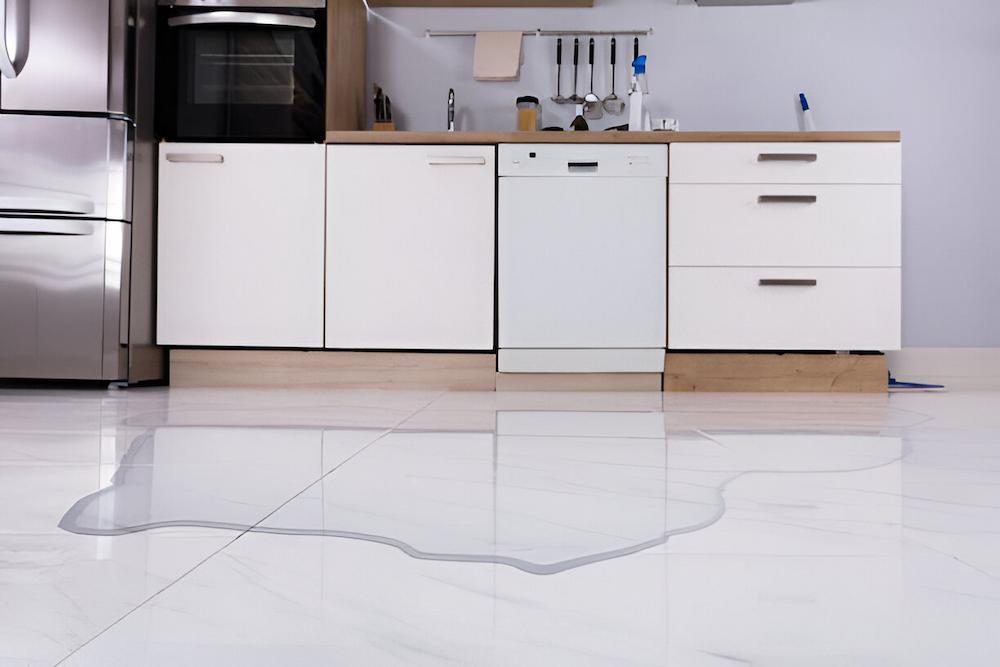
Water on the floor under the dispenser usually comes from ice melting in the bucket. It is the same root problem as the frozen block, just at an earlier stage, so treat it the same way.
Loud fan noise or clicking from the door
A buzzing, grinding or clicking noise from the left door often means ice has built up around the ice maker fan and the blades are hitting it. Defrosting stops the noise, but the frost will come back unless the cause is fixed.
How to Safely Defrost a Frozen Ice Maker
A manual defrost will not fix the underlying cause, but it gets the ice maker working again and shows you how bad the build-up is. It takes about 30 minutes of work plus waiting time.
- Turn the ice maker off. Use the ice maker or "Ice Off" button on the control panel so it stops trying to fill while you work.
- Remove the ice bucket. Empty it into the sink and let it warm up. If it is frozen in place, do not pry it out with a knife or screwdriver.
- Melt the frost. Leave the left door open with towels underneath, or use a hair dryer on a low setting, keeping it moving and away from the plastic. Never use a heat gun or a sharp tool on the ice maker.
- Dry everything. Wipe the compartment, the bucket and the area around the ice maker until they are completely dry. Leftover water will simply refreeze.
- Check the seal. Look at the gasket around the ice compartment. It should be soft, clean and sit flat all the way around with no gaps or tears.
- Reinstall and restart. Put the bucket back, close the door firmly and turn the ice maker on. The first ice usually takes 12 to 24 hours.
Many Samsung models also have a built-in forced defrost or ice maker test mode that you start with a button combination. The steps differ from model to model, so check the owner's manual for your model number before trying it.
Why the Ice Keeps Coming Back
If the ice maker freezes up again within a few weeks of a defrost, something is letting warm air in or failing to keep the compartment cold. The most common causes we find are:
- A worn compartment gasket that no longer seals the ice maker box.
- A failed ice maker heater or thermistor, the parts that keep the ice maker and the area around it at the right temperature.
- A weak or iced-up ice maker fan that cannot move enough cold air through the compartment.
- A door that does not close fully, often because of an overloaded door bin or a fridge that is not leveled.
Samsung has released updated ice maker parts for many affected models over the years. A technician can tell you whether a newer part is available for your model number, which is often the difference between a fix that lasts and one that comes back next month.
When to Call a Technician
Call a pro if the ice maker freezes up again after a manual defrost, if water is leaking inside the fresh-food section or onto the floor, if you hear the fan grinding even after defrosting, or if the refrigerator itself is not keeping food cold. Ice maker problems that come with warm food usually point to a bigger cooling issue.
A technician tests the heater, the sensor, the fan and the water valve with the right tools instead of guessing, checks for updated parts and makes sure the compartment seals properly before leaving. You approve the price before any work starts.
Repair or Replace the Ice Maker?
Replacing the whole refrigerator because of the ice maker rarely makes sense. Most ice maker repairs, whether a new gasket, heater, fan, valve or the ice maker module itself, cost a fraction of a new fridge. If your Samsung is otherwise cooling well and is less than ten years old, repairing the ice maker is almost always the better choice.
If the refrigerator is older, also has cooling problems or has had several repairs already, your technician can help you weigh repair against replacement honestly.
AceTech repairs Samsung refrigerators and ice makers across Sacramento, Fair Oaks, Roseville, Folsom, Davis and the East Bay, usually the same day, and every repair comes with a 180-day guarantee.