On this page
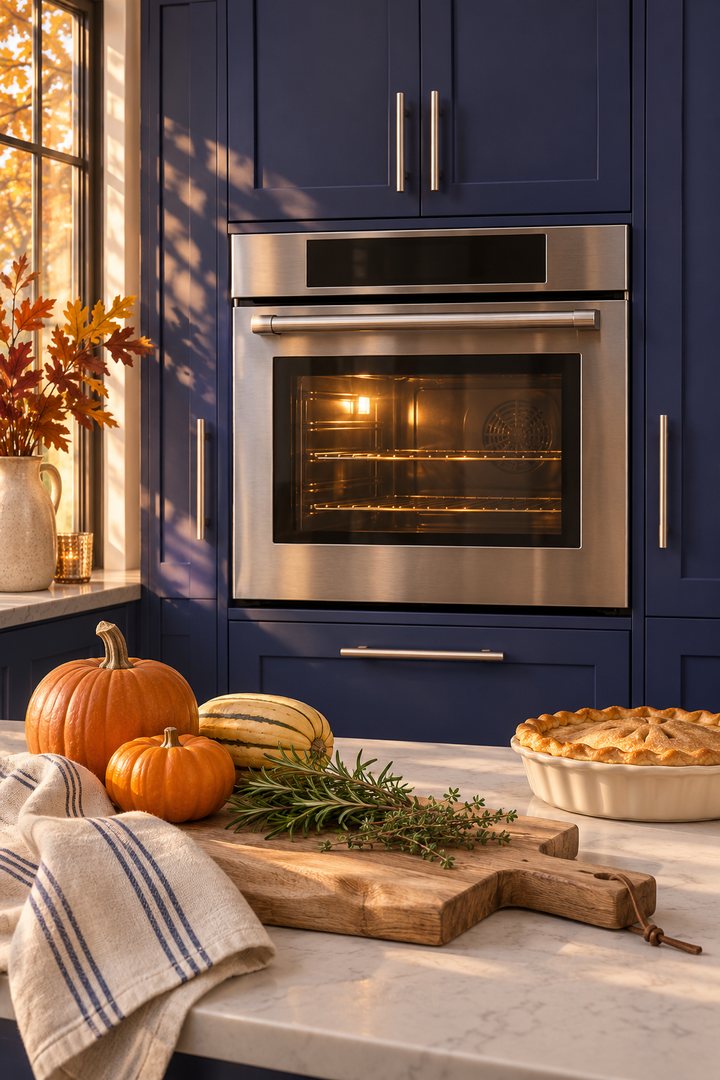
Thanksgiving is the busiest day of the year for most home ovens. It runs for hours at high heat, the door opens dozens of times, and the stovetop works overtime next to it. It is also the worst possible day to find out that the bake element is failing or that the oven runs 40 degrees cold.
The week before Thanksgiving is one of the busiest times of the year for appliance repair in Sacramento and the East Bay, so the best time to catch a problem is now, while there is still time to fix it. This checklist walks you through what to test, what to avoid and how to set up your kitchen so the big day goes smoothly.
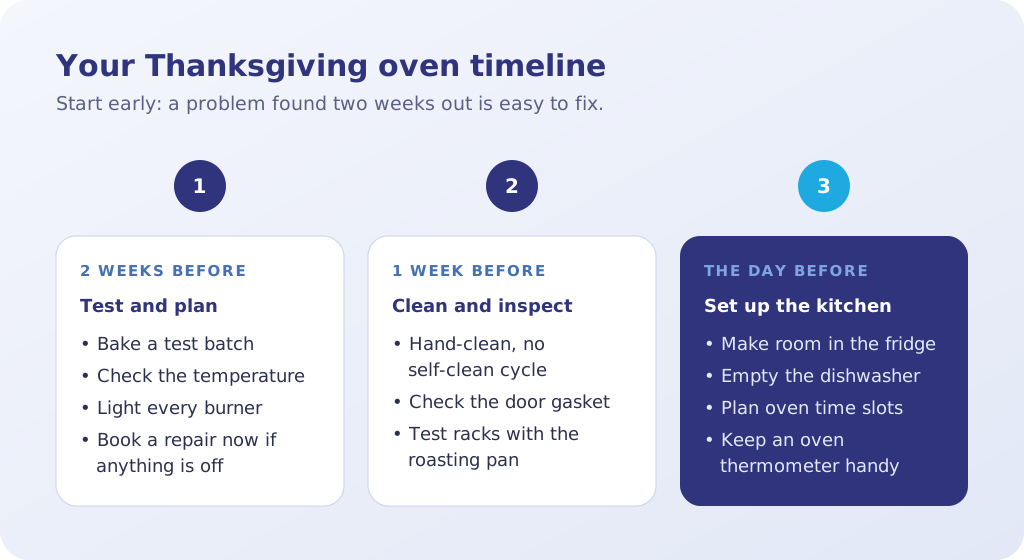
Two Weeks Before: Test Your Oven
Use your oven for something real at least once in the first half of November: a sheet of cookies, a tray of roasted vegetables or a test pie. Pay attention to how long it takes to preheat, whether the food browns evenly and whether anything smells or sounds unusual.
Time the preheat
Most ovens reach 350°F in about 10 to 15 minutes. If yours now takes 25 minutes or longer, or never quite reaches temperature, one of the heating parts is weakening: on an electric oven usually the bake element, on a gas oven usually the igniter. A slow preheat rarely fixes itself, and a turkey cooking in a slow oven can run hours behind schedule.
Check the temperature
Oven dials and displays are often off by 15 to 25 degrees, and many people never notice until a turkey takes an hour longer than planned. An inexpensive oven thermometer tells you the truth:
- Place the thermometer on the middle rack, in the center of the oven.
- Preheat to 350°F and wait 20 minutes after the oven says it is ready.
- Read it three times, about 10 minutes apart, without opening the door for long. Ovens cycle on and off, so the temperature naturally swings up and down a little.
- Average the readings. Within 10 to 15 degrees of 350°F is fine.
If the average is off by 25 degrees or more, many digital ovens let you adjust the temperature offset from the settings menu; your owner's manual shows how. If the oven is off by much more, heats unevenly or the reading keeps drifting, the temperature sensor, the bake element or the igniter may be failing, and that is worth having checked before the holiday.
Watch the heating parts
On an electric oven, the bake element at the bottom should glow evenly orange along its whole length. Dark spots, blisters or a visible break mean it is on its way out. On a gas oven, the igniter should glow bright orange and the burner should light within a minute or so. A long delay before ignition, a faint glow or a gas smell means it is time to call a technician.
Light every burner
Turn on each stovetop burner one at a time. Gas burners should light within a few clicks and burn with an even blue flame. Constant clicking after the flame is lit, a yellow or uneven flame, or an electric coil that only heats partly are all easy fixes now and real headaches on Thanksgiving morning.
One Week Before: Clean and Inspect
Skip the self-clean cycle
This is the single most important tip in this guide. The self-clean cycle heats the oven to around 800 to 900 degrees for several hours. That extreme heat is exactly what pushes a tired thermal fuse, door lock or control board over the edge, and we see a wave of ovens that died during self-clean every November.
If your oven needs cleaning, clean it by hand with a paste of baking soda and water, or a non-abrasive oven cleaner, and wipe it out the next day. Save the self-clean cycle for January, when a breakdown is an inconvenience and not a cancelled dinner.
Check the door gasket
The soft gasket around the oven door keeps the heat inside. Run your fingers along it: it should be springy and continuous, with no flattened, torn or missing sections. A damaged gasket lets heat escape, makes the oven work harder and causes uneven cooking near the door.
Test the racks with your roasting pan
Put your roasting pan on the lowest rack position you plan to use and make sure the door closes fully and the pan clears the bake element and the oven walls. Finding out that the pan does not fit at 7 a.m. on Thanksgiving is a stress you can avoid in two minutes today.
The Day Before: Set Up the Kitchen
Thanksgiving is a whole-kitchen event, so give the other appliances a quick look too:
- Refrigerator. Make room for the turkey, side dishes and leftovers, and keep the fridge at 37°F. An overstuffed fridge blocks the air vents and warms up fast.
- Dishwasher. Clean the filter and start the day with an empty dishwasher so you can run loads between courses.
- Oven schedule. Plan which dish goes in when. Most turkeys need the oven for hours, so sides that bake at the same temperature can share the oven, and anything else can use the stovetop or a slow cooker.
What to Do If the Oven Fails on Thanksgiving
If the oven stops heating in the middle of cooking, do not keep resetting it or switching it on and off. Turn it off, keep the door closed so the food holds its heat and check your breaker panel; on many electric ovens a tripped breaker causes exactly this. If the oven smells of gas, turn it off, open the windows and call your gas utility from outside the house.
For the food, the stovetop, a grill or a neighbor's oven can save the day. A spatchcocked (butterflied) turkey also cooks in far less time if you need to restart on the grill.
When to Book a Repair
Book a technician now if your oven runs more than 25 degrees off, takes much longer than usual to preheat, heats unevenly, shows an error code, or if the bake element, igniter or any burner is not working right. Most of these repairs take a single visit, and doing them two weeks early means you cook Thanksgiving dinner with confidence instead of crossing your fingers.
AceTech repairs gas and electric ovens, ranges and cooktops across Sacramento, Fair Oaks, Roseville, Folsom, Davis and the East Bay, usually the same day, with a 180-day guarantee on every repair.